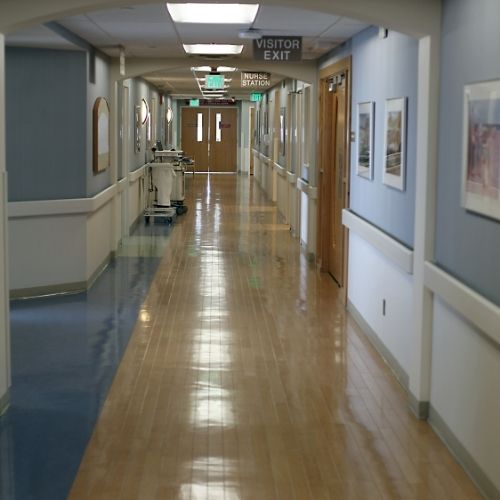

Clinical care ends; recovery risk does not. This simple truth sits at the heart of post-acute continuity challenges, yet it is often overlooked in the design and governance of recovery systems. Discharge is frequently treated as an outcome, a line drawn under a period of clinical intervention. But for those navigating the realities of trauma recovery, discharge is not an endpoint, it is a transition point, one that marks a shift in responsibility, visibility, and risk.
For individuals navigating recovery, this shift is rarely obvious or well supported. While formal care may conclude, the conditions that shape long-term recovery continue to evolve, often outside the reach of structured systems.

Discharge as a Transition Point
Discharge is an important milestone, but it is not synonymous with recovery. It signals the end of active clinical oversight, not the resolution of recovery-related vulnerability. What follows is a change in context rather than a conclusion, one in which individuals move from monitored environments into less visible, self-managed spaces.
At this point, responsibility becomes more diffuse. Contact reduces, accountability softens, and emerging risks are harder to detect. The system steps back just as recovery begins to rely more heavily on personal capacity, stability, and continuity.
Clinical Stability and Recovery Stability Are Not the Same
Clinical stability is essential, but it is not a guarantee of long-term recovery. It reflects what can be measured within structured care: symptoms managed, thresholds met, risks assessed at a specific moment in time. Recovery stability, by contrast, unfolds gradually and unevenly. It is shaped by routine, environment, social connection, and the ability to adapt when challenges arise.
It is entirely possible for someone to meet all clinical discharge criteria while remaining vulnerable to deterioration. The difference is not the quality of care delivered, but the absence of systems designed to hold recovery once formal care has ended.


Why Deterioration Often Happens Quietly
Post-discharge deterioration rarely presents as a sudden crisis. More often, it appears incrementally: appointments missed, confidence eroding, functional capacity fluctuating, social withdrawal increasing. These changes can develop slowly, without triggering formal thresholds for intervention.
When recovery pathways rely solely on discharge outcomes or episodic follow-up, these patterns remain largely invisible. The issue is not service failure, but system design, recovery risk continues, while monitoring and ownership quietly recede.
A System-Aware Perspective
Addressing this gap does not require assigning blame or extending clinical treatment indefinitely. It requires acknowledging the limits of discharge as a marker of stability and designing systems that recognise recovery as a longer, less linear process.
This means treating discharge as a transition that needs orientation, structure, and continuity, rather than an endpoint where risk is assumed to be resolved. Editorial discussions within The Shift and the orientation logic underpinning post-acute recovery frameworks consistently point to the same conclusion: recovery trajectories need visibility beyond formal care boundaries.
Closing Reflection
Recovery does not end when care ends. It changes form.
For clinicians, rehabilitation leads, commissioners, and policy audiences, the challenge is not to extend treatment, but to ensure continuity, building structures that reflect how recovery actually unfolds over time, not how systems prefer to measure it.
Discover more from Trauma Pain Support Ltd.
Subscribe to get the latest posts sent to your email.
