
September 2026 · Practitioner Briefing
Recovery Happens in a Life, Not a Clinic: Social and Family Context
Why home, relationships and daily environment shape recovery outcomes, and why they belong in the clinical picture.
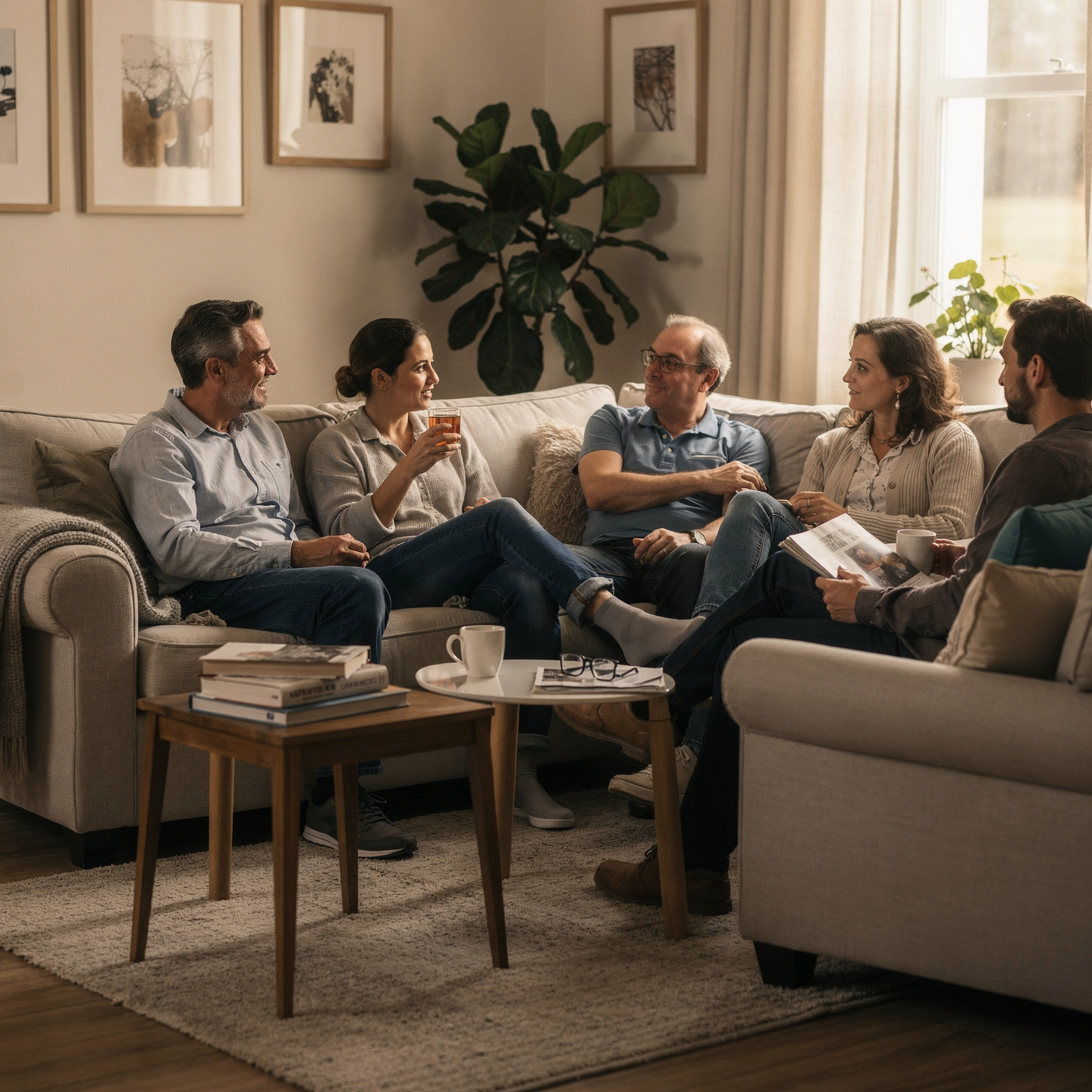
A survivor spends a small fraction of their recovery in front of a professional. The rest of it takes place at home, among family and friends, and within the ordinary demands of daily life. The circumstances a survivor returns to can support recovery or work against it, yet they are easily left out of a picture built mainly from clinical encounters. This article considers why social and family context matters to recovery after serious road traffic trauma, and why it deserves a place in professional understanding.
On This Page
01 Where Recovery Actually Happens
02 What Context Can Support or Undermine
03 The People Around the Survivor
04 What This Means for Practitioners
Where Recovery Actually Happens
Clinical contact, however good, occupies only a small part of a survivor’s week. The overwhelming majority of recovery is lived out at home and in the community, in the spaces between appointments. What a survivor returns to therefore matters enormously to how they progress.
Two survivors with similar injuries can follow very different paths, not because of anything measured in a clinic, but because of the very different circumstances they go home to. Context is not a soft add-on to recovery. It is a large part of the ground on which recovery either takes hold or struggles.
What Context Can Support or Undermine
A survivor’s daily circumstances can quietly help or hinder their recovery in ways that rarely appear in a clinical record.
Home and practical demands
Housing, caring responsibilities, finances and the practical load of daily life can add strain that competes directly with recovery.
Support or isolation
A supportive network can carry a survivor through hard stretches, while isolation can leave the whole burden resting on one person.
Roles and identity
Work, parenting and the roles a person holds shape both the pressures they face and the motivation and meaning that support recovery.
The People Around the Survivor
The people closest to a survivor are central to recovery, and they are affected by the accident too. Partners and family often take on new practical and emotional loads, frequently with no preparation and little support of their own.
“A family that is coping is one of a survivor’s greatest assets. A family that is depleted cannot sustain support indefinitely, however willing.”
Recognising that the survivor’s support system has its own limits, and its own needs, is part of understanding recovery realistically. The wellbeing of those around a survivor is not separate from the survivor’s own progress.
What This Means for Practitioners
Bringing context into view does not mean taking on responsibility for a survivor’s whole life. It means letting an understanding of their circumstances inform professional judgement.
Ask about the wider picture
A brief understanding of home circumstances and support can make sense of progress that otherwise seems puzzling.
Set realistic expectations
Goals that ignore a survivor’s real circumstances can be difficult to sustain. Context helps set expectations that fit the life they are living.
Signpost wider support
Where social, practical or family pressures are significant, signposting to appropriate services can address barriers a clinical service cannot.
This article is educational rather than prescriptive. Its aim is to keep the life a survivor lives in view, so that recovery is understood in context rather than only as it appears within an appointment.
Practitioner Reflection Questions
01 How much is known about the home and social circumstances a survivor returns to after each appointment?
02 When progress varies between survivors with similar injuries, is context considered as a reason?
03 Are the needs of the people supporting a survivor ever taken into account?
04 What routes exist to signpost social, practical or family support where it is needed?
Conclusion
Recovery after serious road traffic trauma is lived far more in a home and a life than in a clinic. The social and family context a survivor returns to shapes their progress as much as any intervention. Keeping that context in view helps professionals understand recovery as it actually unfolds, and support it more realistically.
This article forms part of the TPS Practitioner Resource Series examining long-term post-acute recovery following serious road traffic trauma.
This article is produced by the Trauma Pain Support team for practitioner education purposes. It does not constitute clinical guidance and is not a substitute for professional judgement or medical advice.
